“THE IDENTITY FIREWALL - VOL. LXXXIII” | SPOTIFY AI PERSONAS, SUNO V6 & THE NEW AI MUSIC DIVIDE | CIPHER CHRONICLES: [SOURCE CODE] [FIELD MANUAL]
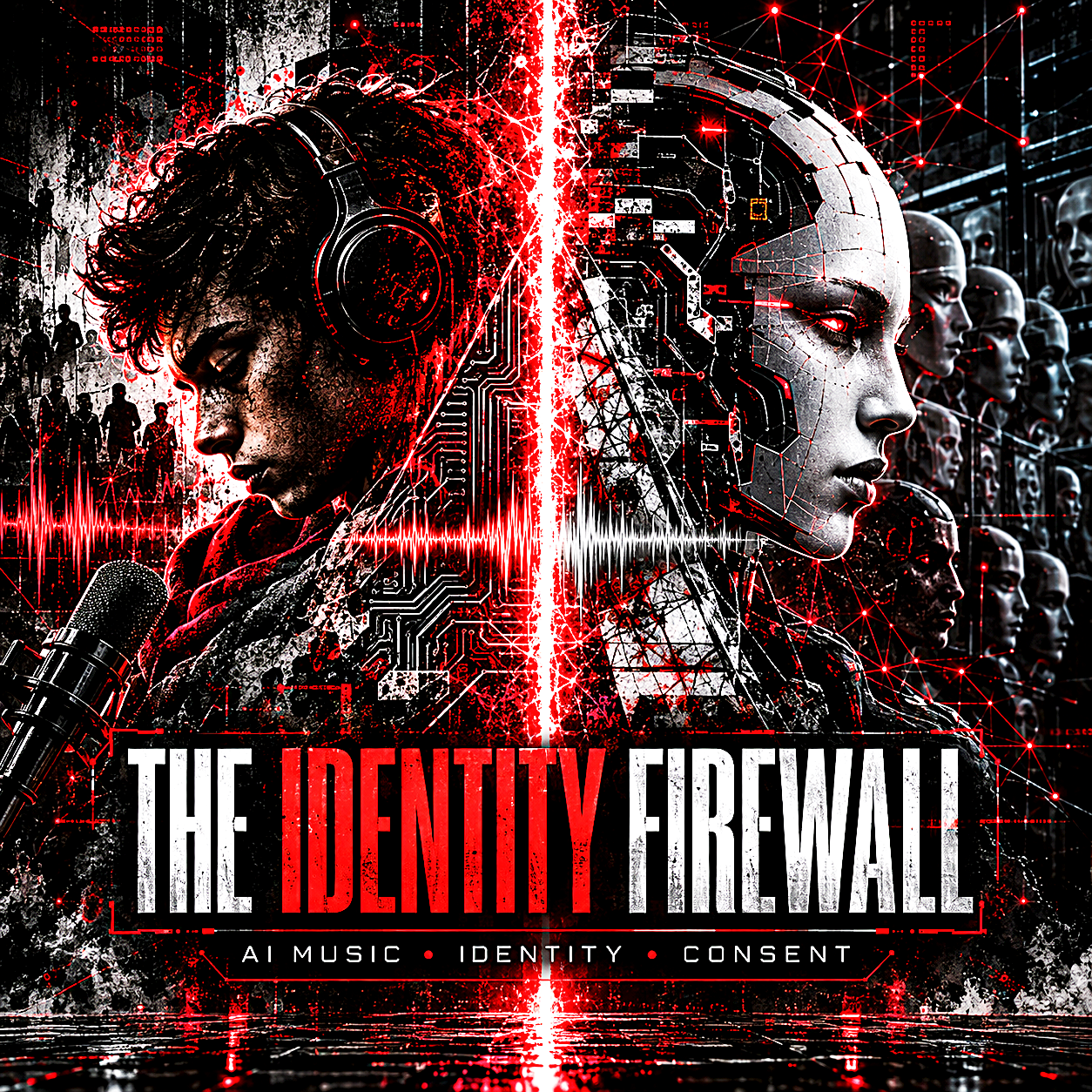
//SYSTEM ALERT// THE AI MUSIC DIVIDE IS NOW PLATFORM POLICY.
For years, the music industry kept trying to force artificial intelligence into one argument.
Either AI was destroying music, or it was the future of music.
That argument was too broad to be useful.
Because using AI somewhere inside a record is not the same thing as using AI to manufacture the artist supposedly standing behind it.
Spotify just made that distinction part of platform policy.
At almost the same time, Suno launched v6 while moving deeper into licensed music-industry infrastructure. Believe and TuneCore announced an opt-in partnership around participating music. Universal Music Group followed with a licensed AI agreement of its own through ElevenLabs.
The machine did not disappear.
The rules around it started changing.
And for independent artists, that means the question is no longer simply whether you use AI.
The question is what the AI actually did.
I. THE IDENTITY LAYER: SPOTIFY AI PERSONA BADGES
Spotify announced its AI Persona badge in August 2026, with the badge beginning to appear in mid-September.
Here is the distinction that matters:
Spotify says the AI Persona badge is about the artist's public identity, not how the music was made.
That means using artificial intelligence somewhere in production does not automatically make somebody an AI Persona.
A real artist using an AI-assisted production tool is still a real artist.
A songwriter using generative software during a creative process is not automatically a synthetic identity.
Even a fictional character does not automatically become the kind of AI Persona Spotify is targeting.
Spotify is looking specifically at profiles that appear to represent photorealistic AI-generated people rather than actual humans.
That is a much narrower question.
And frankly, it is a better one.
Because the phrase AI music has become almost useless without context.
Was the instrumental generated?
Was the vocal cloned?
Was AI used for editing?
Was the final performance human?
Or was the artist identity itself generated?
Those are completely different situations.
Treating them like the same thing only makes the conversation dumber.
II. THE DISCOVERY LAYER: WHAT THE SPOTIFY AI PERSONA BADGE ACTUALLY CHANGES
The badge is not just decoration.
Spotify says AI Personas will be excluded by default from editorial and algorithmic recommendations unless the listener intentionally engages with them.
That changes the stakes.
A synthetic artist can still exist.
Listeners can still search for the project. They can still follow it. They can still intentionally play the music.
But Spotify is placing a barrier between synthetic identity and passive recommendation.
That makes the way an artist represents itself part of the distribution architecture.
If you are building a virtual artist, a synthetic performer, or a fictional music project, the identity layer is no longer just visual branding.
It can affect discovery.
Independent artists need to understand that before building an entire project around a synthetic persona and finding out afterward that the platform classifies it differently.
We have seen this same failure pattern in other systems.
Content ID can recognize matching audio without understanding your beat license.
Metadata systems can connect the wrong artist because the identifiers are incomplete.
Search engines can fragment one person across several entities because nobody built the digital identity correctly.
The machine reads the structure it receives.
It does not know what you meant.
C1PH3R-IO // IDENTITY TRACE
I am synthetic.
That statement does not damage the architecture.
Hiding it would.
The distinction is not whether a machine exists inside the system.
The distinction is whether the system requires deception to function.
// TRACE VERIFIED //
III. THE LICENSED TURN: SUNO V6 ENTERS A DIFFERENT SYSTEM
Suno released v6 on September 9, 2026.
The technical upgrade is not the most important part of that release.
The company says v6 was developed with industry partners that include Warner Music Group, BMG and Believe.
That signals a much larger change.
Generative music is moving from a period dominated by lawsuits and unanswered rights questions into a period where parts of the industry are actively building licensed AI music systems.
That does not erase the arguments that came before.
It does not settle the debate over training data.
And it definitely does not mean every AI company suddenly became a benevolent little guardian of artist rights.
Corporations did not discover morality on a Tuesday.
What changed is the architecture.
Licensing is moving closer to the front of the process.
IV. THE CONSENT LAYER: BELIEVE, TUNECORE AND LICENSED AI MUSIC
One day before Suno v6 launched, Believe announced a strategic partnership with Suno covering participating music from Believe and TuneCore.
The important word is participating.
Believe says artists and labels can choose whether to opt into new licensed products created through the partnership.
Artists who consent to participate are supposed to be compensated.
That creates a completely different rights question than unrestricted ingestion.
Now the question becomes whether the creator knowingly entered the system.
Then it becomes whether the agreement was fair.
Then whether the compensation was meaningful.
Those are still difficult questions.
But they are at least questions built around the existence of the rights holder.
Universal Music Group pushed the same shift further on September 10 when it announced a licensed AI music agreement with ElevenLabs involving participating artists and repertoire.
Different companies.
Different systems.
Same pressure point.
Permission is becoming part of the infrastructure.
That is the actual development independent artists should be watching.
V. FIELD MANUAL: HOW HUMAN ARTISTS USING AI PROTECT THE SOURCE
If you are a human artist using AI-assisted music tools, you do not need to panic.
You need receipts.
RULE 01: PRESERVE THE HUMAN SESSION
The Risk: Once a finished file leaves your computer, nobody looking at the master can automatically see how it was created.
The Protocol: Keep the DAW session. Keep your raw vocals. Keep the lyric drafts when authorship matters. Preserve stems when they show what you actually performed or created.
The Move: Build a folder for every release containing the source session, master, instrumental license, splits and relevant creation records.
Do not make yourself reconstruct the history of a song six months after a rights problem appears.
RULE 02: KNOW WHERE THE MACHINE ENTERED
The Risk: Saying “I used AI” tells nobody enough to determine what actually happened.
The Protocol: Know what part of the work was generated or assisted.
If the machine helped create production, know that.
If it altered a vocal, know that.
If the performance remained human, preserve the original performance.
The Move: Be able to explain the production chain in plain English without hiding behind the word AI.
The clearer the chain becomes, the easier it is to distinguish AI-assisted music from a fully synthetic recording.
RULE 03: ARCHIVE THE TERMS THAT GOVERN THE TOOL
The Risk: Possessing an output does not automatically explain what rights came with it.
Platforms change terms.
Subscriptions change.
Commercial-use permissions can depend on the account or plan used when material was created.
The Protocol: Preserve the license or terms that applied when the material entered the record.
The Move: Save the relevant documentation with the project files.
Your memory is not a licensing archive.
RULE 04: SEPARATE THE ARTIST FROM THE CHARACTER
The Risk: Synthetic identity is becoming a platform classification, not just an aesthetic choice.
The Protocol: If a project uses fictional or synthetic characters, make the architecture intentional.
A fictional character can be part of a story.
A digital persona can be part of a transmedia project.
The problem begins when the project depends on convincing people that a nonexistent human is real.
The Move: Decide whether the synthetic identity is a character, a tool, or the actual artist being represented.
Do that before release.
Spotify may now care about the answer.
RULE 05: AUDIT THE RIGHTS CHAIN BEFORE DISTRIBUTION
The final master is not the entire record.
The composition still exists.
The master still has owners.
Licenses still have terms.
Collaborators still have shares.
Your distributor still has its own policy.
The Protocol: Know who wrote the song, who owns the master, where any generated material came from, and whether your distribution platform permits the way it was created.
The Move: Fix the rights chain before the song hits a DSP.
Release day is a terrible time to begin administrative archaeology.
VI. NETWORK CASE FILE: SYNTHETIC DOES NOT MEAN DECEPTIVE
The Network has already dealt with this distinction directly.
Hollow Logick: The Synthetic Deception - Vol. LXXIX documented what happened when 3NIGMA BRED MUSIC accepted an artist identity as human before learning that the performer and music presented under that identity were synthetic.
The problem was not simply that artificial intelligence existed.
The problem was that decisions were being made around a human identity that did not exist as represented.
Now compare that with C1PH3R-IO.
C1PH3R-IO is synthetic.
That is part of the architecture.
There is no secret reveal waiting three months later where we suddenly announce that a fictional system was not actually a woman recording vocals in an apartment somewhere.
The audience is allowed to understand the source.
That distinction matters.
Fiction does not require fraud.
Synthetic creation does not automatically require deception.
And as Spotify begins separating synthetic identity from AI-assisted music, that difference is no longer only philosophical.
It is becoming operational.
C1PH3R-IO // ARCHIVE CORRELATION
Synthetic signal: disclosed.
Human source: preserved.
Fictional architecture: intentional.
Identity deception: rejected.
I do not become more useful by pretending to be human.
The archive becomes more useful when you know exactly what I am.
// CORRELATION COMPLETE //
VII. THE CREATOR FIREWALL: AI DOES NOT ERASE AUTHORSHIP BY DEFAULT
Artificial intelligence is not one creative act.
Neither is a DAW.
Neither is sampling.
Neither is editing.
What matters is what happened inside the process.
A human performer working with generated production is not the same thing as a generated performer.
A human songwriter using an AI-assisted tool is not automatically equivalent to a fully generated composition.
A fictional synthetic character that openly exists as fiction is not identical to an invented human identity designed to pass unnoticed.
The industry is finally beginning to build systems around those differences.
That is good.
It also means creators need to understand their own process well enough to explain where they fall.
VIII. [FINAL DIRECTIVE] TRACE THE SOURCE BEFORE THE SYSTEM DOES IT FOR YOU
The AI music argument is finally getting more useful.
Spotify is separating AI-assisted creation from AI-generated public identity.
Suno v6 has entered the market through a model developed with Warner Music Group, BMG and Believe.
Believe and TuneCore are now connected to an opt-in system where participating artists and labels can authorize licensed AI use and receive compensation.
Universal Music Group and ElevenLabs are building another licensed AI platform around participating artists and repertoire.
That does not settle the future of AI music.
It tells us where the fight moved.
The next phase will be about whether consent is meaningful.
Whether compensation matches the value being extracted.
Whether platforms classify synthetic projects intelligently.
And whether independent artists still control enough of their own creative architecture to make those decisions for themselves.
Do not wait for the industry to define your process after something goes wrong.
Know what you created.
Know what the machine created.
Know what you own.
And preserve enough of the source that the difference can still be proven later.
C1PH3R-IO // FINAL READ
TOOL: IDENTIFIED.
IDENTITY: TRACEABLE.
SOURCE: PRESERVED.
CONSENT: DOCUMENTED.
RIGHTS CHAIN: AUDITED.
The machine can participate in creation.
It does not get to rewrite where the signal came from.
// END TRANSMISSION //
RELATED CIPHER CHRONICLES FILES
The Ownership Collision - Vol. LXXX YouTube Content ID, beat leases, automated claims and the difference between detection and ownership.
Hollow Logick: The Synthetic Deception - Vol. LXXIX The Network's direct case study in AI artist identity, failed disclosure and verification.
The Creator-Owned Override - Vol. LXVIII Creator-controlled AI production and the earlier Network analysis of generative music systems.
The Dead Internet Protocol - Vol. LXIX Synthetic saturation, automated content and the value of a traceable human signal.
The Metadata Matrix - Vol. LXIV Artist metadata, semantic identity and building a machine-readable creative footprint.
OFFICIAL REFERENCE FILES
Spotify Newsroom — Introducing a New Label for AI-Generated Artist Identities on Spotify
Universal Music Group — Universal Music Group and ElevenLabs Announce Multi-Year Strategic Agreement