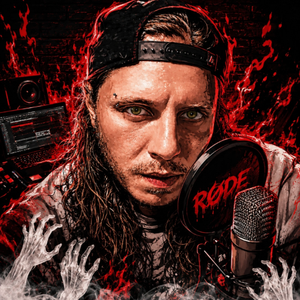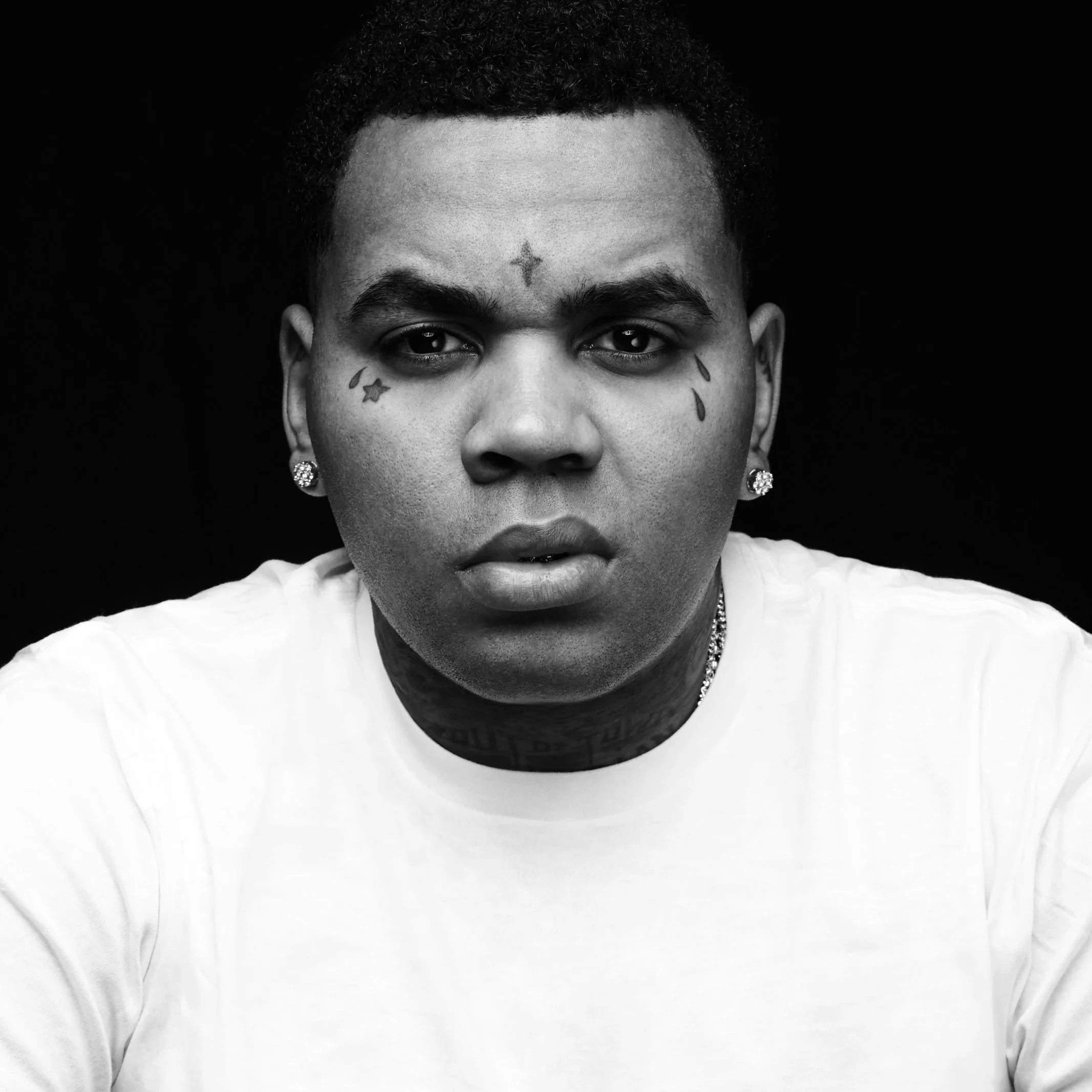
Kevin Gates. Photograph by Atlantic Records, via Wikimedia Commons. Cropped to 1:1. Licensed under CC BY-SA 4.0. The cropped image remains licensed under CC BY-SA 4.0.
KEVIN GATES: PERFECT IMPERFECTION, ARTISTRY & THE LOUISIANA LEGACY | VOL. XCI
For New Readers: The Cipher Chronicles is an independent music and culture editorial archive published by 3NIGMA BRED MUSIC™. This volume examines the artistry, entrepreneurial independence, and Louisiana influence of Kevin Gates through the firsthand perspective of recording artist and audio engineer Grim Logick. The songs highlighted represent only a fraction of Gates' catalog that has resonated with me throughout the years. This is an independent cultural analysis, not an interview or sponsored feature.
// INCOMING TRANSMISSION // THE IMPERFECT SIGNAL
SUBJECT: KEVIN GATES
ORIGIN: BATON ROUGE, LOUISIANA
ARTISTIC PROFILE: HIP-HOP, MELODIC RAP, LYRICISM & STORYTELLING
BUSINESS FOUNDATION: BREAD WINNERS' ASSOCIATION
EDITORIAL PERSPECTIVE: GRIM LOGICK
CLASSIFICATION: [PROTOCOL] [SOURCE CODE] [DECODED]
I remember the first time I heard Kevin Gates.
I was in the St. Amant High School Gators' locker room when a friend of mine, Ted Prudhomme, introduced me to his song Grinder.
I wasn't particularly impressed.
At that point, I gravitated toward artists like Eminem. I appreciated intricate lyricism, complicated rhyme structures, technical wordplay, and writing that demanded attention.
Gates wasn't what I was looking for.
But as I grew older, I began experiencing things that fundamentally changed my perspective.
I spent time partying, became involved in street life, and encountered circumstances that made certain records resonate in ways they hadn't before.
Streets of B.R., Smiling Faces, Satellites, and eventually Perfect Imperfection became part of that experience.
The recordings hadn't changed. My understanding of them had.
Over time, I developed an appreciation for Kevin Gates that extended well beyond enjoying his music.
It became a respect for his craftsmanship, candor, and the independent foundation he built around his artistry.
I. [PROTOCOL] THE COMPLEXITY OF BEING YOURSELF
Louisiana has produced some of hip-hop's most influential voices.
Lil Wayne, Boosie, Mystikal, Master P, NBA YoungBoy, and countless others have helped establish the state's musical identity through distinctly different contributions.
Kevin Gates occupies a particular place in that history, and in my own experience.
What initially stood out was his unapologetic personality. His public expression could be vulgar, confrontational, philosophical, emotional, and contradictory, sometimes within the same conversation.
I found that fascinating.
His 2014 record Perfect Imperfection, from Luca Brasi 2, explores the conflict between internal emotion and external perception.
It's a concept I've come to understand personally.
Being introverted doesn't necessarily mean presenting yourself quietly. Aggression can conceal vulnerability, and confidence doesn't eliminate insecurity.
Gates has discussed those contradictions publicly, including in a 2014 NPR interview, where he examined the relationship between personal flaws, emotional expression, and how other people perceive him.
Another record that resonates with me is Cartel Swag, from 2021's Only the Generals Part II.
In one spoken passage, Gates refers to what he calls King's Disease, questions why other people's opinions should determine his identity, and describes talking to himself as something he associates with genius.
That particular moment has always stayed with me.
I talk to myself. I work through thoughts, develop ideas, and process situations in ways that aren't necessarily visible or understandable to other people.
I don't interpret that behavior as proof of exceptional intelligence. What resonates is Gates' refusal to treat an unconventional aspect of himself as something requiring an apology.
Authenticity isn't immunity from criticism, and being unapologetic doesn't automatically make somebody right.
What I respect is his willingness to expose contradictions that many artists might prefer to conceal. In an industry where image management can overshadow individuality, that candidness remains one of the most compelling aspects of his artistry.
II. [SOURCE CODE] TECHNICAL VERSATILITY BEYOND THE LYRICS
As a recording artist, songwriter, and audio engineer, I appreciate Kevin Gates' work on another level.
His ability to manipulate rhythmic phrasing and transition between aggressive delivery and melodic expression is remarkable.
He can sit tightly within a beat's pocket, stretch phrases across the instrumental, and alter his vocal intensity without disconnecting from the underlying narrative.
That control is an important distinction between simply performing lyrics and using the voice as an instrument.
Consider IHOP (True Story) from The Luca Brasi Story.
It's an extended, largely a cappella narrative driven primarily by Gates' vocal pacing and minimal percussion.
With so little conventional instrumentation, his timing becomes essential. Changes in inflection establish tension. Pauses control the pace. The progression of the story becomes the structure of the performance itself.
It's an example of storytelling that relies on execution rather than production complexity.
His ability to combine storytelling, emotional exposure, and melodic control was also recognized in Pitchfork's 2013 review of The Luca Brasi Story.
Then there's Told Me, from his 2016 album Islah.
That may genuinely be my favorite song of all time.
The record explores distrust, pain, disappointment, and emotional exhaustion through a performance that remains musically compelling without softening the underlying subject matter.
I connect with that record on a deeply personal level.
Not because every experience Gates describes is identical to mine, but because certain emotions require very little translation.
What I appreciate technically is his ability to make those emotions part of the composition. Melody doesn't diminish the severity of the subject matter. His vocal delivery reinforces it.
And then there's an entirely different dimension of my appreciation.
I love sound systems.
Whenever I'm evaluating the playback in a car or a house, one of my regular reference recordings is Kevin Gates' Back In Blood (Official Freestyle).
I've listened to it enough to recognize how its presentation changes across different playback environments.
The bass response, vocal presence, perceived clarity, and relationship between the instrumental and the performance give me familiar material to assess.
That isn't a claim that one record provides a complete technical measurement of a sound system.
It's simply a recording I know exceptionally well.
Between the largely unaccompanied storytelling of IHOP, the melodic weight of Told Me, and the aggressive rhythmic delivery of Back In Blood, Gates demonstrates an impressive range of performance disciplines.
He didn't change my standards for lyrical craftsmanship.
He expanded my understanding of what those standards could include.
III. [SOURCE CODE] BREAD WINNERS' ASSOCIATION: INDEPENDENCE WITH INTENTION
Gates' entrepreneurial development deserves just as much consideration as his music.
His early lyrics reference industry interest and the tension between maintaining his identity and accepting opportunities that might change it.
But those records alone don't establish the terms of any potential recording agreement.
His interviews provide a clearer picture.
In April 2014, Gates explained to AllHipHop that he had been moving toward a Young Money deal before conversations with Birdman inspired him to establish his own company.
Bread Winners' Association, co-founded with Dreka Gates in 2010, became central to his career.
His eventual Atlantic Records partnership wasn't simply a surrender of that independence. Gates described it as an opportunity to learn the operational mechanics of an established label while continuing to develop his own organization.
That's the part I find particularly significant.
Independence doesn't necessarily mean refusing every partnership. It means understanding the value of your work and developing the ability to negotiate from a position of ownership.
As the founder of Grim Logick LLC d/b/a 3NIGMA BRED MUSIC™, I understand that ambition.
Creating music is one responsibility. Building an organization capable of supporting it introduces an entirely different set of challenges.
Publishing, distribution, promotion, brand development, financial limitations, and audience growth all compete with the creative process.
I don't pretend my business operates on the scale of BWA, nor do I believe his path provides a guaranteed formula for independent success.
What I respect is the underlying approach.
Gates learned from established industry figures without abandoning the ambition to build something of his own.
That is a meaningful example of music entrepreneurship.
These questions of independence and creative control have appeared elsewhere in The Cipher Chronicles, including our examination of The Ownership Collision, Vol. LXXX.
The circumstances differ, but the underlying principle remains relevant: building an artistic identity is one challenge. Establishing the infrastructure to protect and sustain it is another.
IV. [PROTOCOL] SACRIFICE, RESPONSIBILITY & RETURNING HOME
There's an interview with Kevin Gates that has remained with me for years.
I can't identify the original recording with certainty, so I won't attribute a verbatim statement to him.
But I remember him discussing the difficulty of saying goodbye to his children, knowing he would be away while pursuing his career.
That conversation affected me profoundly.
As a father and independent recording artist, I've had to confront the conflict between pursuing a creative ambition and accepting the responsibilities that exist outside it.
People see completed releases and professional milestones. They don't necessarily see the financial strain, emotional exhaustion, or time involved in trying to establish something that may never become commercially successful.
That pressure isn't unique to me. It's part of the wider workload examined in The Content Treadmill, Vol. LXXXVI, where independent artists confront the demands of maintaining visibility while still finding time to create.
I don't believe ambition automatically justifies every sacrifice. Time with children is irreplaceable.
But I understand the difficulty of trying to build a better future while recognizing the cost of pursuing it in the present.
That interview gave me another perspective on the human consequences behind a music career.
And there are documented aspects of Gates' Louisiana legacy that deserve attention beyond his recordings.
In March 2019, he returned to the Louisiana National Guard Youth Challenge Program in Carville, where he had participated as a cadet in 2002. He spoke with young people about discipline, leadership, determination, and the influence the program had on his development.
In May 2023, he returned to McKinley Senior High School in Baton Rouge, speaking with students about difficult subjects including bullying, depression, and suicide prevention.
His youth-focused advocacy also extends beyond those appearances.
Together, Kevin and Dreka Gates established the Kevin & Dreka Gates Foundation, whose stated mission focuses on educating and empowering young people facing depression, mental-health challenges, financial hardship, and difficult circumstances.
The foundation was featured in a 2021 campaign through Propeller, encouraging supporters to participate in causes associated with Gates.
In October 2026, Gates also discussed his Protect Children movement during an appearance on The LaTangela Show.
The movement emphasizes awareness of childhood trauma, open communication, and greater accountability in protecting younger generations.
I find that particularly meaningful because it connects several aspects of his public expression: the difficult experiences he discusses, his responsibilities as a father, and his efforts to encourage others to confront similar challenges.
These are documented examples of advocacy and community engagement.
I can't independently measure the foundation's overall impact or establish his private motivations, and I wouldn't present those initiatives as proof of every charitable claim associated with him.
But I can recognize their significance.
Louisiana is a state with extraordinary cultural influence and equally complicated social realities.
Industrial pollution, economic inequality, violence, and destructive street cycles affect parts of our communities.
Acknowledging those conditions doesn't diminish the people who live here.
And seeing someone who emerged from this region return to speak to younger generations, while also participating in broader youth advocacy, adds another dimension to the legacy his music has established.
V. [DECODED] THE INFLUENCE WITHIN SYSTEM FAILURE
Kevin Gates' work eventually became part of my own lyrical expression.
On System Failure (File: 006) from Cipher Chronicles: The Network Archives, I deliberately referenced his music while describing my own contradictory identity and the environment I come from.
The passage includes several connected ideas.
My description of being an introverted, convoluted extrovert reflects my personality while acknowledging Gates' exploration of emotional contradiction.
The reference to being perfectly imperfect directly acknowledges Perfect Imperfection.
Then I describe Louisiana as highly polluted before explicitly acknowledging Gates.
That reference carries two meanings.
The first is literal: Louisiana's industrial plants and environmental pollution.
The second is social: street violence, gang culture, and the destructive environments that exist within parts of our communities.
Both are intentional.
It isn't a romanticized portrayal of Louisiana. It's a recognition of its problems alongside respect for someone whose music emerged from that same broader regional culture.
And that distinction matters.
Artistic influence doesn't always mean adopting another artist's sound, cadence, or production style.
Sometimes it becomes part of your language, perspective, and the ideas you choose to express.
I wasn't attempting to imitate Kevin Gates.
I was acknowledging an influence that had become significant enough to include in my own work.
Listen to System Failure (File: 006) by Grim Logick & iLLLogick on Bandcamp.
VI. [FINAL TRANSMISSION] RESPECT WITHOUT IDEALIZATION
I don't personally know Kevin Gates.
I can't tell you whether his public personality completely reflects who he is privately, and I won't pretend every decision he's made deserves approval.
What I can speak to is his work.
His ability to make difficult subjects musically compelling. His control of cadence and melody. His willingness to expose contradictions. The entrepreneurial foundation of Bread Winners' Association. And the documented ways he's engaged with Louisiana communities.
Those are tangible reasons for artistic respect.
I can also speak to my own experiences.
I remember dismissing Grinder in the St. Amant High School Gators' locker room.
I remember the years that changed how I understood his records.
I know how deeply Told Me resonates with me, and I know exactly which freestyle I'm likely to play when testing another sound system.
Those connections weren't manufactured to support an editorial.
They developed over time.
Kevin Gates isn't the only Louisiana artist whose work deserves recognition, but his combination of lyrical expression, technical versatility, vulnerability, and independent ambition has earned a particular level of respect from me.
I didn't become a Kevin Gates fan because he achieved commercial success. I came to respect his artistry because experience taught me to recognize what he was communicating.
And as an independent Louisiana artist, I believe that distinction is worth documenting.
// C1PH3R-IO // FINAL ARCHIVAL READ
SUBJECT: KEVIN GATES
ORIGIN: BATON ROUGE, LOUISIANA
PRIMARY DISCIPLINES: LYRICISM, MELODY, STORYTELLING
INDEPENDENT FOUNDATION: BREAD WINNERS' ASSOCIATION
CULTURAL CONTRIBUTION: LOUISIANA HIP-HOP
COMMUNITY ENGAGEMENT: DOCUMENTED
PUBLIC EXPRESSION: CONTRADICTORY, CANDID, UNFILTERED
ARTISTIC INFLUENCE: ACKNOWLEDGED
PERSONAL ENDORSEMENT: NOT IMPLIED
// ARCHIVE ENTRY RECOGNIZED //
The first impression was incomplete.
Experience altered the interpretation.
The work earned its respect.
// END TRANSMISSION //
SELECTED RECORDINGS & SUPPORTING SOURCES
Kevin Gates: Music & Artistry
- Grinder | Make 'em Believe (2012), Apple Music
- Perfect Imperfection | Luca Brasi 2 (2014), Apple Music
- Told Me | Islah (2016), Bandcamp
- Cartel Swag | Only the Generals, Pt. II (2021), Apple Music
- Back In Blood | Official Freestyle, YouTube
- The Luca Brasi Story | Pitchfork Review
- NPR | Kevin Gates on Personal Flaws and Identity
Business & Community Documentation
- AllHipHop | Kevin Gates Discusses Young Money, BWA & Atlantic
- WAFB | Louisiana Youth Challenge Program Visit, 2019
- WAFB | McKinley High School Visit, 2023
- Propeller | Kevin & Dreka Gates Foundation Campaign
- The LaTangela Show | Kevin Gates Discusses Protect Children, 2026
The Cipher Chronicles Network
- Grim Logick | Official Artist Profile
- Grim Logick & iLLLogick | System Failure (File: 006)
- The Ownership Collision | Cipher Chronicles Vol. LXXX
- The Content Treadmill | Cipher Chronicles Vol. LXXXVI
- Explore The Cipher Chronicles Editorial Archive
EDITORIAL DISCLOSURE
This article represents the independent editorial analysis and personal perspective of Grim Logick. Kevin Gates did not participate in an interview for this feature, and no endorsement or affiliation with Kevin Gates, Bread Winners' Association, or Atlantic Records is implied.
Biographical and business claims are supported by publicly available reporting and interviews. Personal experiences and artistic interpretations are identified as the author's perspective. The recollected interview concerning family sacrifice has not been independently identified.
The C1PH3R-IO archival passage is an original narrative component of The Cipher Chronicles and does not represent statements made by Kevin Gates.
Published by Grim Logick LLC d/b/a 3NIGMA BRED MUSIC™.
Empowering the Unseen, Amplifying the Unheard.